What are the Car Seat Laws in New York?
By Ross Cellino
Car seat laws in New York are meant to protect children from serious injuries in a car crash. Because children are smaller and more vulnerable than adults, the right car seat or booster seat can make a major difference.
In New York, children must use an appropriate child restraint system until they reach their 8th birthday. Children under 2 must ride in a rear-facing car seat unless they exceed the height or weight limits set by the car seat manufacturer.
If your child was injured in a car accident caused by another driver, Cellino Law can help you understand your legal options. Schedule a free case evaluation online or call us at 888-888-8888 to speak with a member of our team.
Key Takeaways About New York Car Seat Laws
- New York requires children under 8 to ride in an appropriate child restraint system.
- Children under 2 must ride rear-facing unless they outgrow the seat manufacturer’s height or weight limits.
- A child restraint system may include a car seat, harness, vest, or booster seat.
- A child may still need a booster seat after turning 8 if the vehicle’s seat belt does not fit correctly.
- Children under 13 are generally safest in the back seat, even when front-seat riding is not banned by law.
What Does New York Law Require for Child Car Seats?
New York law requires children to use a proper safety restraint while riding in a motor vehicle. The right restraint depends on the child’s age, height, weight, and the manufacturer’s instructions.
Under New York’s child passenger safety rules:
- Children under 2: must ride in a rear-facing car seat unless they outgrow the seat manufacturer’s limits.
- Children under 4: must be secured in a federally approved child safety seat.
- Children ages 4 – 7: must use a child safety seat or booster seat that fits their size.
Children must use an appropriate child restraint system until their 8th birthday, as a regular seat belt alone is not the right restraint for most children under 8.
An appropriate child restraint system includes a car seat, harness, vest, or booster seat used with the vehicle’s seat belt or LATCH system.
Types of Car Seats Required in New York
Choosing the right car seat can be confusing because children grow at different rates. Age matters, but height, weight, and seat instructions matter too.
Rear-Facing Car Seats
Children under 2 must ride in a rear-facing car seat in New York. Infants and toddlers should stay rear-facing for as long as possible, up to the highest height or weight allowed by the seat manufacturer.
Rear-facing seats help support a young child’s head, neck, and spine in the event of a crash. If a child still safely fits in a rear facing car seat after turning 2, they do not need to be put into a forward facing car seat.
Forward-Facing Car Seats
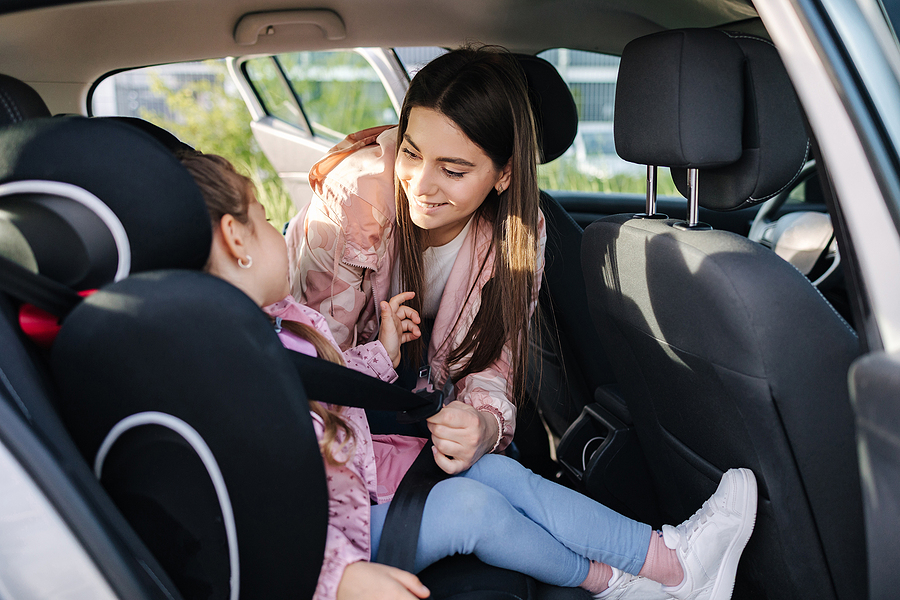
Once a child outgrows a rear-facing seat, they should move to a forward-facing car seat with a harness. Children should stay in a forward-facing seat until they reach the seat’s height or weight limit.
Parents and caregivers should check the seat’s label and manual for:
- Height limits
- Weight limits
- Harness instructions
- Installation instructions
- Expiration date
A forward-facing seat should be installed correctly and used with the harness adjusted to fit the child.
Booster Seats
Children who outgrow a forward-facing car seat may need a booster seat. Booster seats help position the vehicle’s seat belt so it rests across the stronger parts of the child’s body.
In New York, children ages 4 through 7 must use a child safety seat or booster seat unless they meet certain size requirements. A child may be able to use an adult seat belt if they are more than 4 feet 9 inches tall or weigh more than 100 pounds, but only if the seat belt fits properly.
A booster seat should only be used with a lap and shoulder belt.
Seat Belts
A child may be ready to use a regular seat belt when the belt fits their body correctly without help from a booster seat. This usually depends more on the child’s height and body position than their age alone.
Before moving a child out of a booster seat, parents and caregivers should check whether the seat belt sits in the right places. A proper seat belt fit means:
- The child can sit with their back flat against the vehicle seat
- Their knees bend comfortably over the edge of the seat
- The lap belt rests low across the upper thighs, not the stomach
- The shoulder belt crosses the chest and shoulder, not the neck or face
- The child can stay seated this way for the entire ride
If the seat belt rides up on the child’s stomach, cuts across their neck, or causes them to slouch, they may not be ready to use a seat belt alone. In that case, continuing to use a booster seat can help the seat belt fit properly and provide better protection in a crash.
Can a Child in a Car Seat Sit in the Front Seat?
New York law does not always ban children from sitting in the front seat. However, the back seat is usually safer.
Safety guidance recommends that children under 13 ride in the back seat. This helps keep children farther away from front passenger airbags and gives them better protection in many types of crashes.
A rear-facing car seat should never be placed in front of an active passenger airbag. If the airbag deploys, it can seriously injure or kill a young child.
Why Does Proper Car Seat Use Matter?
Car seats and booster seats help reduce the risk of serious injury when they are used correctly. When compared with seat belt use alone, proper car seat use can significantly reduce a child’s risk of injury. Booster seats also help older children by making the seat belt fit properly.
A car seat may not protect a child as intended if it is:
- The wrong size for the child
- Installed incorrectly
- Used with loose harness straps
- Expired or damaged
- Placed in an unsafe seating position
Parents and caregivers can also look for car seat inspection stations or car seat check events in New York to confirm that the seat is installed correctly.
Common Car Seat Mistakes Parents Should Avoid
Many car seat mistakes happen even when parents are trying to do the right thing. Even a small mistake on how the car seat is installed or used can reduce how much protection it provides.
Common mistakes include:
- Moving a child out of a rear-facing seat too soon
- Using a booster seat before the child is ready
- Letting the seat belt rest on the child’s stomach or neck
- Leaving harness straps too loose
- Using an expired car seat
- Reusing a car seat after a crash without checking whether it should be replaced
The safest choice is to follow the car seat manual, vehicle manual, and height and weight limits listed by the manufacturer.
Penalties for Violating New York Car Seat Laws
Drivers can be ticketed if a child passenger is not properly secured. New York is a primary enforcement state, which means a law enforcement officer can issue a ticket for a seat belt or child restraint violation alone.
Violating New York’s seat belt and child restraint law may lead to fines. Some child passenger safety violations can also result in driver license penalty points.
Beyond the penalties, the bigger concern is safety. A properly used car seat can help protect a child from severe injuries in a crash.
What If a Child Is Injured in a Car Accident?
Even when a child is properly secured, they can still be hurt in a serious crash. Car seats reduce risk, but they cannot prevent every injury.
Common injuries that children sustain after an accident include::
- Head injuries
- Neck and back injuries
- Broken bones
- Internal injuries
- Seat belt or harness-related injuries
- Emotional distress after the crash
If another driver caused the crash, the child’s parent or guardian may be able to pursue a claim for medical bills, pain and suffering, and other damages. Even if the parent is partially at fault for the crash, they may still be able to recover damages due to New York’s comparative fault law.
What to Do After a Crash Involving a Child Passenger
After a car accident involving a child, your first priority should be medical care. Some injuries are not obvious right away, especially with young children who may have trouble explaining how they feel.
After the crash, you should:
- Call 911 and report the accident
- Have your child checked by a medical professional
- Take photos of the vehicles, car seat, and crash scene
- Save the car seat to be inspected or replaced
- Get the other driver’s insurance information
- Collect witness names and contact information
- Speak with a car accident lawyer before accepting a settlement
Insurance companies may contact you soon after the crash. Before giving a recorded statement or signing anything, it can help to understand your rights and what your child’s claim may involve.
FAQ: New York Car Seat Laws
What is the car seat law in New York?
New York requires children to use an appropriate child restraint system until they reach their 8th birthday. The restraint must fit the child’s age, height, and weight.
What is the rear-facing car seat law in New York?
Children under 2 must ride in a rear-facing car seat unless they exceed the height or weight limits set by the car seat manufacturer.
When can a child use a booster seat in New York?
A child may use a booster seat after outgrowing a forward-facing car seat. The booster should position the lap belt low across the upper thighs and the shoulder belt across the chest and shoulder.
When can a child stop using a booster seat in New York?
A child can stop using a booster seat when the vehicle’s seat belt fits properly without it. Some children may still need a booster after turning 8 if they are not tall enough for the seat belt to fit correctly.
Can a child sit in the front seat in New York?
New York law does not always prohibit children from sitting in the front seat, but children under 13 are generally safest in the back seat. A rear-facing car seat should never be placed in front of an active passenger airbag.
Was Your Child Hurt In An Accident? Call Cellino
Car seat laws in New York help protect children, but serious injuries can still happen when another driver is careless. If your child was injured in a crash, you may have questions about medical bills, insurance coverage, and what steps to take next.
Cellino Law can review the accident, explain your options, and help you understand what may come next. Contact us online or call 888-888-8888 today for a free case evaluation. There is no fee unless we win your case.
Content checked by the personal injury attorney Ross Cellino
Ross Cellino
As a family man and a trial attorney, I pride myself on winning cases and serving the community. With over 35 years of experience, I understand the function of a jury, how juries arrive at conclusions, and the role that the jury plays in administering justice. I know how to win cases. You can find us in Manhattan, Buffalo, Melville, Rochester, Brooklyn, The Bronx, Queens, and other locations throughout New York, New Jersey, and Connecticut.