Who’s Liable in a School Bus Accident?
School buses are designed to safely transport students to and from school, but accidents can still happen. A child may be injured in a collision, while getting on or off the bus, at a bus stop, or because another driver fails to stop for a school bus.
When that happens, figuring out who is responsible is not always straightforward. Liability may fall on the bus driver, another motorist, a school district, a private transportation company, or another party. In some cases, more than one person or organization may share responsibility.
If your child was injured in a school bus accident in New York, New Jersey, or Connecticut, Cellino Law can review what happened and explain your legal options. Schedule a free case evaluation online or call 888-888-8888.
Key Takeaways About Liability in School Bus Accidents
- A school bus driver, school district, private transportation company, another driver, maintenance provider, or vehicle manufacturer may be liable for a school bus accident.
- More than one party can share responsibility when several actions or safety failures contribute to the crash.
- Claims involving a public school or government entity may have shorter notice deadlines than other personal injury claims.
- Evidence such as camera footage, driver records, maintenance records, witness statements, and accident reports can help determine who was at fault.
- An injured student or other accident victim may be able to seek compensation for medical costs, pain and suffering, lost income, and other losses.
- Claims involving public school districts can have special notice requirements and shorter deadlines.
Who Can Be Liable for a School Bus Accident?
Determining liability begins with figuring out how the accident happened and who had a responsibility to prevent it. Possible responsible parties may include:
- The school bus driver
- Another driver
- The school district
- A private bus company hired to transport students
- A maintenance or inspection company responsible for overseeing the condition of the bus
- A school bus or parts manufacturer
- Another government entity
The answer of “who is liable” depends on the circumstances of the accident. A crash caused by a distracted bus driver presents different liability questions than an accident caused by another motorist passing the bus while children are getting off.
Evidence such as surveillance or dash footage, police reports, driver records, maintenance documents, and witness statements may help determine what happened.
When The Bus Driver Is Liable
A school bus driver may be liable when careless or unsafe driving causes an accident.
School bus drivers are responsible for following traffic laws and operating their vehicles safely. Because they transport children, their actions before, during, and after each trip can be an important part of an accident investigation.
Examples of negligent driving may include:
- Speeding
- Distracted driving
- Following another vehicle too closely
- Running a red light or stop sign
- Making an unsafe turn or lane change
- Driving while impaired
- Driving while fatigued
- Failing to adjust to weather or road conditions
- Failing to follow safe loading or unloading procedures
School buses are also larger and heavier than most passenger vehicles. New York’s Department of Motor Vehicles notes that school buses have larger blind spots, require more room to maneuver, and need more distance to stop.
If a bus driver’s negligence causes an accident, the driver’s employer may also be responsible in some situations.
When The School District Is Liable
A school district may be liable for a school bus accident depending on how transportation is provided and what caused the injury. Some districts own their buses and directly employ their drivers, while others contract with private transportation companies.
A claim involving a school district could include allegations such as:
- Hiring or retaining an unsafe driver
- Failing to provide proper training
- Ignoring known safety concerns
- Failing to maintain a district-owned bus
- Creating or enforcing unsafe transportation procedures
- Failing to properly supervise students in certain situations
Determining whether a school district is responsible often requires reviewing contracts, employment records, safety policies, and other documents.
Connecticut law also addresses certain injuries involving students being transported to or from school. Under state law, governmental immunity is not available as a defense in certain actions involving school transportation, and the fact that transportation was provided by an independent contractor does not automatically prevent a claim against the municipality.
When A Bus Company Is Liable
A bus company may be liable when its own actions contribute to a school bus accident. This can include poor vehicle maintenance, inadequate inspections, unsafe company practices, or failing to address a known problem.
Maintenance records may help show:
- When the bus was last inspected
- What repairs were recommended
- Whether those repairs were completed
- Whether similar problems had been reported before
- How long a mechanical issue may have existed
States may also have specific inspection requirements. For example, New Jersey requires school transportation vehicles to undergo inspections twice each year.
If a mechanical problem involving the brakes, tires, steering, lights, or other equipment contributed to the crash, the bus company’s maintenance and repair history may help determine whether it shares responsibility.
When A Manufacturer is Liable
Sometimes a school bus accident is connected to a defective bus or defective component rather than poor maintenance. A defect may affect the way the bus operates or how well it protects passengers during a crash.
Potential defects may involve:
- Brakes or steering systems
- Tires
- Doors or emergency exits
- Seats or restraint systems
- Mirrors
- Warning lights or stop arms
School buses are subject to federal vehicle safety standards that address passenger protection, emergency exits, lighting, mirrors, and other equipment. Federal school bus safety standards are intended to reduce risks to children riding in and around these vehicles.
If a defect contributed to the accident or made the injuries more severe, the bus manufacturer, component manufacturer, or another company involved in producing or distributing the part may need to be investigated.
What If the School Uses a Private Bus Company?
Many school districts hire private companies to transport students. When a crash involves one of these buses, the transportation company may be liable for the driver’s actions or for its own safety failures.
An investigation may look at whether the company:
- Properly screened and qualified the driver
- Provided appropriate training and supervision
- Reviewed the driver’s safety record
- Followed inspection and maintenance requirements
- Addressed previous complaints or safety concerns
- Removed unsafe buses from service
Employment records, training documents, maintenance logs, and company policies can help determine whether the bus company took reasonable steps to keep students safe.
Can Another Driver Be Responsible for a School Bus Accident?
A school bus driver or transportation company is not always responsible for a crash. Another driver could be liable if they:
- Rear-end the school bus
- Run a red light
- Cross into the bus’s lane
- Make an unsafe turn
- Drive while distracted
- Speed through a school zone
- Fail to yield
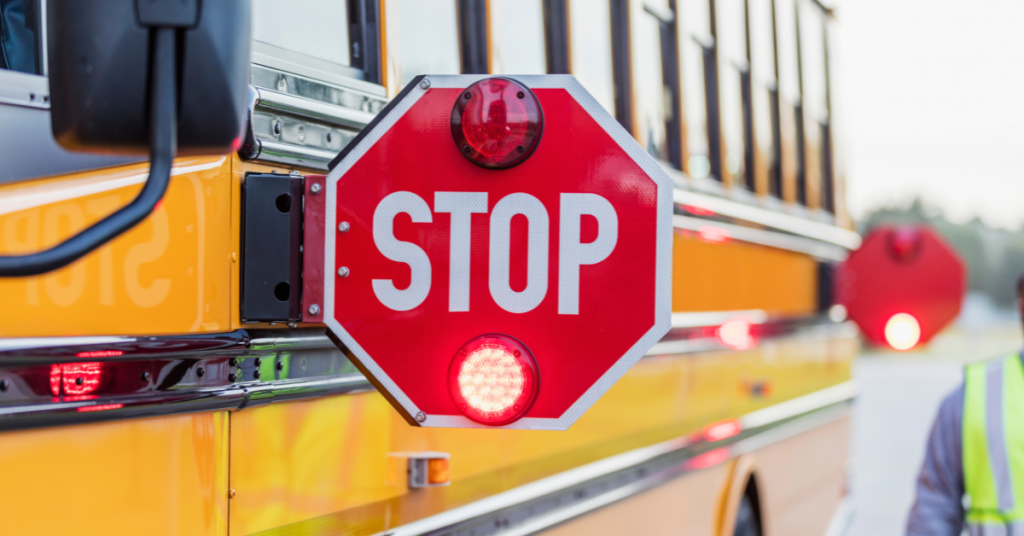
- Pass a stopped school bus illegally
Passing a stopped school bus can be especially dangerous because children may be crossing the road, as the National Highway Traffic Safety Administration‘s school bus safety guidance emphasizes that children face particular risks when they are waiting for a bus, getting on or off, and walking near bus stops.
For example, New York law requires motorists to stop when approaching a school bus displaying flashing red lights while students are being picked up or dropped off. The state’s school bus safety rules are designed to protect children who may be entering or crossing the roadway.
A driver who illegally passes a stopped school bus could be responsible if that action causes a child to be struck or leads to another collision.
Who Is Responsible When a Child Is Hit Getting On or Off the Bus?
Some school bus accidents happen while a child is getting on or off the bus rather than while the bus is moving. These moments can be especially dangerous because children may need to walk near traffic or cross the street.
Children may be at risk while:
- Walking toward the bus
- Crossing the street to board
- Stepping off the bus
- Crossing in front of the bus
- Waiting at a bus stop
NHTSA guidance on safer school bus stops and routes considers factors such as traffic patterns, visibility, walking routes, and how children approach and leave the bus.
Liability may involve the bus driver if the bus was stopped in an unsafe location or proper loading and unloading procedures were not followed. Another motorist may also be responsible for ignoring flashing red lights or a deployed stop arm.
In some cases, the location of the bus stop may also need to be reviewed, especially if the school district or transportation provider knew about an ongoing safety concern.
Can More Than One Party Be Liable?
Several parties may ultimately contribute to the same school bus accident.
For example, imagine that a bus driver is traveling too fast when the bus experiences a brake failure. An investigation may find that the driver was driving unsafely, the transportation company failed to maintain the bus, and a repair company previously performed faulty brake work.
Another accident could involve negligence by both the school bus driver and another motorist. Identifying all responsible parties is important because each defendant may have different insurance coverage and different legal responsibilities.
An attorney can review the facts of the accident and determine which individuals, businesses, or government entities may be included in a claim.
What Should Parents Do After a School Bus Accident?
After an accident, your child’s health should come first. Seek emergency medical care when necessary and arrange an evaluation if your child may have been injured. Some injuries, including concussions and soft tissue injuries, may not become obvious immediately.
Parents can also:
- Get basic information. Write down the date, time, location, bus number, route, and names of the people involved.
- Report the accident. Notify the school or transportation provider and ask how to obtain a copy of the incident report.
- Document injuries. Take photographs and keep notes about symptoms, treatment, and medical appointments.
- Identify witnesses. Record the names and contact information of anyone who saw what happened.
- Preserve records. Save medical documents, school communications, transportation notices, photographs, and damaged property.
- Ask about available video. School buses may have interior or exterior cameras that captured the accident.
- Speak with a personal injury lawyer. An attorney can help determine who may be liable, preserve important evidence, communicate with insurance companies, and identify any special notice deadlines that may apply.
When asking your child what happened, avoid suggesting answers or leading them toward a particular version of events. Write down what they remember in their own words while the details are still fresh.
Do School Bus Accident Claims Have Special Deadlines?
The deadline for a school bus accident claim can depend on who is responsible for the crash. A claim against a private bus company or another motorist may follow different rules from a claim involving a public school district, municipality, or other government entity.
Public entity claims can also have additional notice requirements. In New York, many claims against school districts or municipal entities require a notice of claim within 90 days. New Jersey also has a 90-day notice period for many claims against state and local public entities under its Tort Claims Act. The state’s Tort Claims Act notice process explains the steps that may apply when a claim is filed late.
Connecticut has separate requirements depending on the public entity involved and the circumstances of the accident.
Because these deadlines can be much shorter than the time allowed for other personal injury claims, parents should consider speaking with a school bus accident lawyer as soon as possible. An attorney can determine which deadlines apply and help protect the family’s right to pursue compensation.
School Bus Accident? Call Cellino Law.
Determining who is liable for a school bus accident can require a careful review of the driver, transportation company, school district, other motorists, vehicle maintenance, and available evidence.
The process can become even more complicated when a public school or government entity is involved because shorter notice requirements may apply.
Cellino Law can investigate what happened, identify potentially responsible parties, preserve available evidence, and explain how the laws in New York, New Jersey, or Connecticut may apply.
If your child was injured in a school bus accident, schedule a free case evaluation online or call Cellino Law at 888-888-8888. There is no fee unless we win your case.